Japan's tourism engine is running at full throttle: a record 36.9 million international visitors in 2024, spending an all-time-high ¥8.1 trillion (JNTO). Yet outside the major cities, quality accommodation remains scarce — and that gap is exactly where glamping, and the trailer house, come in.
The opportunity: experiences, not just beds
Japanese domestic travelers and inbound tourists alike are shifting spend toward nature-based, experience-rich stays. Glamping — camping with hotel comforts — commands significantly higher nightly rates than conventional pensions or minshuku, especially among couples and families who would never pitch a tent. The constraint has never been demand; it is the cost and speed of building guest rooms in rural locations.
Why trailer houses change the math
Low capex, fast deployment
A NESTERRA unit arrives factory-finished — hotel-grade shower, separate toilet, kitchen, air conditioning — and needs only minimal site work. No lengthy construction, no building-permit process when properly installed as a vehicle. You can be hosting guests in a fraction of the time a build would take.
Scale one unit at a time
Start with one or two units, measure occupancy, then add capacity in single-unit increments. This staged deployment is nearly impossible with conventional construction — and it dramatically reduces the risk of overbuilding.
An exit no hotel has
If the market shifts, a building must be demolished or sold with the land. A trailer house is a titled vehicle: relocate it to a stronger market, or resell the unit itself. Your downside is structurally different from that of fixed hospitality assets.
The rules you must respect
Japan treats paid lodging seriously. Operating a glamping business requires a license under the Hotel Business Act (Ryokan-gyo Ho) — typically the "simplified lodging" (kan-i shukusho) category — plus fire-safety equipment and an inspection sequence that runs fire department first, then public health center. Unlicensed operation carries penalties of up to six months' imprisonment or a ¥1,000,000 fine. None of this is prohibitive; it simply rewards investors who prepare properly. Local administrative scriveners (gyoseishoshi) handle these filings routinely.
A realistic path to opening
1. Site & feasibility
Confirm the land classification (not farmland), transport access for an 8.5-meter unit, utilities, and — critically — the municipality's stance. Pre-consultation with the public health center, fire department and building authority happens before capital is committed.
2. License groundwork
Fire-safety equipment goes in first; the fire department issues a compliance certificate, which the health center requires for the lodging license. Small properties under 300m² can usually use wireless interconnected alarms, keeping costs modest.
3. Deploy and iterate
Open with one or two units, gather real occupancy data through OTA channels (which typically charge 10–15% commission), then scale unit by unit. Cleaning and check-in can be outsourced; smart locks make remote operation practical.
How the numbers work
Revenue is nightly rate × occupancy × units. On the cost side, two Japan-specific advantages apply: a properly installed trailer house incurs no fixed asset (property) tax, and for business use it depreciates over a statutory four years — front-loading deductions in the years you need them most. (Tax treatment varies by installation and municipality; confirm with a licensed tax accountant.)
Investor FAQ
Q. Can I invest without living in Japan?
You can own the land and the units as a non-resident. Operating a licensed lodging business, however, generally calls for a Japanese business presence and a local operating structure — a resident manager, a management company, or a Japanese entity. Structure this early with a professional; it determines your licensing path.
Q. Why not just run it as minpaku (private lodging)?
Japan's Private Lodging Business Act caps minpaku at 180 operating days per year. For a purpose-built glamping asset, the full lodging license (simplified lodging category) with no day cap is almost always the better economics.
Q. What is the biggest hidden cost?
Utility connection and access-route preparation. Both are knowable in advance through a site survey — which is why we treat the survey as step zero of any credible plan.
Sources & further reading
- JNTO visitor statistics — record 36.9M visitors in 2024: nippon.com summary
- Hotel Business Act (Ryokan-gyo Ho), Act No. 138 of 1948: e-Gov (Japanese)
- Vehicle status under the Building Standards Act — municipal guidance: Kisarazu City (Japanese)
This article is general information as of September 2026, not investment, legal or tax advice. Regulations and their local application change; consult licensed Japanese professionals before committing capital.
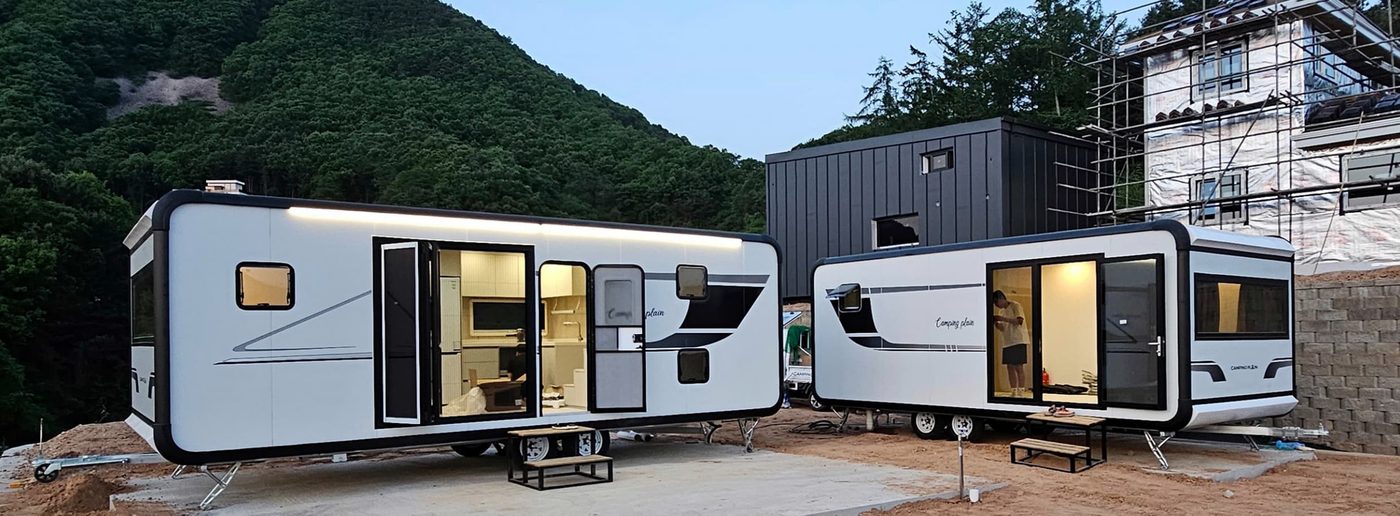
See the asset before you invest.
Spend a free night in our display unit at the Yamami Exhibition Site, Aichi.
We consult with international clients in English.